怎么在Google Slides里打汉字的时候自动带拼音或注音呢?
快来看连育仁老师的这个视频吧。 在Adds-on里搜索安装ToneOz即可!👍
欢迎大家在下面的Comment里分享自己在Google Slides打汉字加拼音/注音的办法!👍
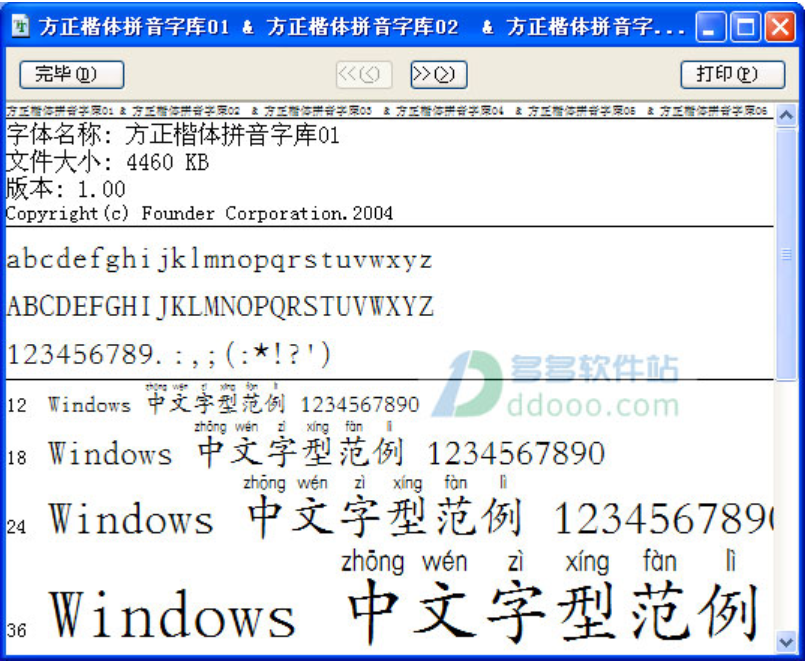
怎么在Office系统Word, PowerPoint里打汉字的时候自带拼音?只需下载安装方正楷体拼音字库01-04。 数字01-04是为了标注多音字。


1. Google Certificated Educator 是什么? What is a Google Certified Educator?
Google Certified Educator 计划为教师提供了获得实用专业发展的机会,同时获得徽章以展示利用科技进行教学的专长。 谷歌认证教育者是指证明在教学和学习环境中使用各种谷歌教育技术工具具有一定水平的人(Budhai, 2021).
The Google Certified Educator program offers the chance for teachers to gain practical professional development while earning a badge to demonstrate their educational tech expertise. A Google Certified Educator is someone who has demonstrated that they have a level of mastery using a wide variety of Google educational tech tools in teaching and learning environments (Budhai, 2021).

2. 为什么要成为 Google Certificated Educator? Why become a Google Certificated Educator?
(Fresno Pacific university Staff, 2019)
(1) 更加有信心地使用科技。 Confidence in using technology.
(2) 帮助学生使用科技。 Help students use tech tools creatively.
(3) 利用科技使教学更有效、有趣。 Make classroom more efficiently and engaging.
(4) 培养学生成为更好的线上公民。 Make students become better digital citizens.
(5) 与时俱进。Promote professional growth and life-long learning.
3. 怎样准备 Google Certificated Educator Level 1 考试? How to prepare for Google Certificated Educator Level 1 Exam?
免费考试复习资料 Free Fundamentals Training https://skillshop.exceedlms.com/student/path/61209-fundamentals-training

4. 考试的相关信息。The information of Google Certificated Educator Level 1 Exam.
(1) 考试链接 The link of register exam https://edu.google.com/for-educators/certification-programs/product-expertise/educator-level1/?modal_active=none
(2) 考试费用: 10美元 Exam fee: $10
(3) 考试时长: 180分钟 Exam length: 180 minutes
(4) 考试类型: 线上35道多选题 Exam questions: 35 multiple choice questions online
(5) 考试镜头: 考试全程需打开摄像头 Exam camera: Turn on the camera of your device through the entire exam time.
(6) 开卷考试 Open-book exam
(7) 考试成绩: 提交试卷后立即得知分数 Exam result: The score shows right after submitting the exam.
(8) 合格分数: 80% Passing rate: 80%
(9) 重新考试: 一年内可以考四次。 Retake the exam: You can take four times in one year.
(10) 证书年限: 三年 The length of the valid certificate: 3 years
5. 我的建议。My suggestions:
(1) 平时常用Google不同功能的朋友可以主要学习一下自己不常用的部分, 比如: Google Earth, Google Keep等。 If you are familiar with Google's functions, then focus on studying the unfamiliar parts, such as Google Earth, Google Keep.
(2) 做每单元后的模拟题。 Answer the mock test questions of each unit.
(3) 搜索并学习网上相关视频。Search and study the related videos.
(4) 向考过的朋友请教。 Ask for advice from the ones who passed the exam.
(5) 通过一级考试后,准备二级考试、创新者考试、培训者考试。 与时俱进。 为自己打开更多职业可能性。同时帮助更多老师们利用科技提升教学。 After passing Level 1 exam, continue with Google Certificated Educator Level 2, Google Certificated Innovator, Google Certificated Trainers exams. Life-long learning can open more doors in one's professional positions and help other educators to improve teaching with the educational technology tools.
深呼吸!快去考一下吧! 加油!Take a deep breath! Go for it! You can do it! 🎉
欢迎大家在下面的"Comment"里分享您的考试心得、教学成果、或提出问题。让我们一起探讨、一起进步!👍 Your feedback will be highly appreciated! Let's discuss and improve collaboratively! 👍
6. 相关视频。 Related videos.
Resources:
Budhai, S. 2021. How to Become a Google Certified Educator? https://www.techlearning.com/how-to/how-to-become-a-google-certified-educator
1. 青花瓷纸花瓶 Blue and White Porcelain Paper Vase
青花瓷纸盘子 Blue and White Porcelain Paper Plate
2. 龙舟粽子手工 Dragon Boats and Rice Dumplings Craft
粽子吊饰 Rice Dumplings Decoration
3. 制作风筝 DIY Kite
5. 全班创作电子书给学弟学妹 Class Made E-book for the Future Students
希望以上的小活动对您有所帮助。欢迎您在下面的Comment里分享您的期末活动。 非常感谢!
I hope the above activities are helpful to you. Welcome to share your activities in the below Comment. Thank you very much!
1. Who are English Learners (ELs)?
According to the Glossy of Education Reform (2013), English learners, or ELs, are students who are unable to communicate fluently or learn effectively in English, who often come from non-English-speaking homes and backgrounds, and who typically require specialized or modified instruction in both the English language and in their academic courses.

2. How many ELs are there?
According to California Department of Education, in the 2021–22 school
year, there were approximately 1.128 million English learners in California
public schools, which is more than the year 2020–21. About 18% of the total
enrollment in California public schools. Although English learner data are
collected for 88 language groups, 93% speak one of the top ten languages
in the state:
In 2021-22 school year, 1,705 students are enrolled in my school, 94.6% students are Socioeconomically Disadvantaged, 17.7% ELs, and 12.8% students with disabilities.
Muniz (2020) states that ELs are perpetually lagging behind their native
English-speaking peers academically. Indeed, report after report show that ELs
consistently under-perform when it comes to statewide tests, graduation rates,
course grades, and more. Notably, though, new research suggests the bleak tale
of the languishing EL may be misguided.
In the past years, EL group of my school has been having the lowest percentage
of meeting the standard of California Assessment of Student Performance and
Progress (CAASPP)’s English Language Arts (ELA) test. Their passing rate is lower than the other subgroups, such as socioeconomically disadvantaged and students with disabilities. This should draw attention from the English
teachers, all teachers, and administrators.
First of all, teachers should know who are ELs in your class. Teachers can obtain the information from the counselors, administrators, testing center, record office, or school Gradebook system like Aeries.
Second, teachers should care about and learn about these ELs' cultural background and embed it to the teaching to engage ELs and expose all students to diverse cultures.
Last but not least, teachers should learn and apply English Learning Development (ELD) teaching strategies, such as using thinking map, visuals, gestures. The following are some effective research based teaching theories and methods to help learners to improve their language proficiency.
The Affective Filter Hypothesis of Krashen and Terrell (1983) points out
that an environment that creates a lot of anxiety and stress in language
learners can raise the “affective filter”, which does not allow language to
“get in”. Teachers need to know do not get mad when ELs are barely learning
English, instead provide them a comfortable and encouraging learning
environment.
Cummins (1981, 2000) explains that although languages can appear and sound very different on the surface, students learning new languages bring with them common underlying proficiencies, or skills and conceptual knowledge, that transfer cross languages. For example, if ELs already know how to summarize a text in their native languages, they already possess the skill of summarizing. Teachers should help them to express that skill in English.
Krashen and Terrell’s Input Comprehension Hypothesis (1983) examines the idea that human acquire language in only one way-by understanding messages or by receiving comprehensible input (Krashen, 1985). Teachers should check ELs’ comprehension more frequently to make sure they understand the content. When ELs understand the language and content, they can improve their academic performance across subjects and ELA.
Mora (2019) states that even though it is the responsibility of the ELD teacher to teach ELs English, ELs need language support throughout the day and across all curricular areas). ELs engage in intellectually rich, developmentally appropriate learning experiences that foster high levels of English proficiency. Throughout the day, students are encountering and learning academic language while also being expected to use it, which makes integrated ELD an essential part of a student’s academic success (Mora, 2019).
For example, in all classes, teachers explain to ELs the meaning of "multiple choice" question asks you to select the best answer. It sounds simple or even silly. But it can be confusing to some ELs. As an EL, I remember I did not do well in my quiz when I started my teaching credential class in CSU Long Beach, I felt sad and confused. I studied diligently for it but the score came out very low. I did not realize I had to select one answer to each question until the professor went over the quiz in class. I noticed every question only had a SINGLE answer. My score in the following tests improved greatly after understanding the meaning of the instruction. However, I still wonder why the instruction is not called "multiple choices" since there are plural selections or "pick the single answer" since we have to choose one answer. It is not rare that EL's questions are not problems to native speakers, or native speakers even have never thought it would be a question. If teachers explain to ELs the meaning of each type of question's instruction, such as multiple choice, true or false, short answer, it may help them do better in their test.
When all teachers across subjects teach ELs with the appropriate accommodations and encourage them to use the language, ELs are offered equity to access the curriculum. The all-around embedded ELD application across curriculum can develop ELs’ full potential and help them be more successful academically.
Thank you for reading my blog. Welcome to leave comment below. Together, we can help students to do better! 👍
Resources:
2013. English Language Learner.
https://www.edglossary.org/english-language-learner/
Cummins J. 1981. Schooling and language minority students: A theoretical framework. Evaluation, Dissemination and Assessment Center, California State University Los Angeles.
Li Ziqi 李子柒 The first influencer I selected is Li Ziqi because she has a unique im...


